Sequel | Project & Roadmap
A clearer operating structure, roadmap, and design-system setup for Sequel's digital experiences.
01
Overview
Intro
Table of contents
At Sequel, I started off with the simple task of managing an external agency for a re-branding.
Two weeks into the project, and I took on a Fractional Head of Product Design role to shape the Sequel’s digital experiences.
Here is the structure I’ve shaped up for the team.
Structure
Table of contents
Project management
At Sequel, I started off with the simple task of managing an external agency for a re-branding.
Two weeks into the project, and I took on a Fractional Head of Product Design role to shape the Sequel’s digital experiences.
Here is the structure I’ve shaped up for the team.
This digital workspace aimed to solve common issues I bumped into almost all prior projects I worked on, like lack of visibility, misalignment, and dependency bottlenecks.
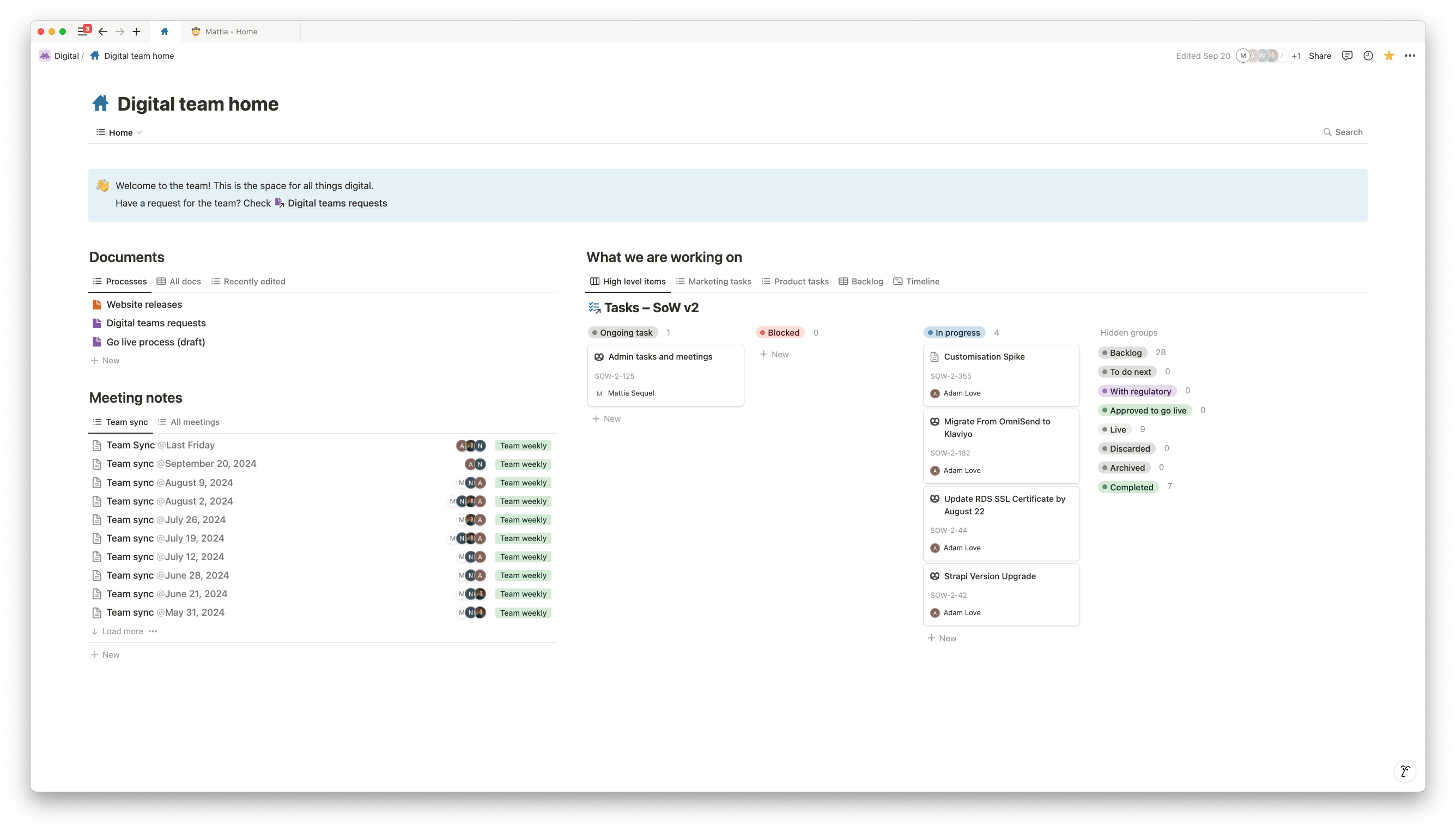
Roadmap
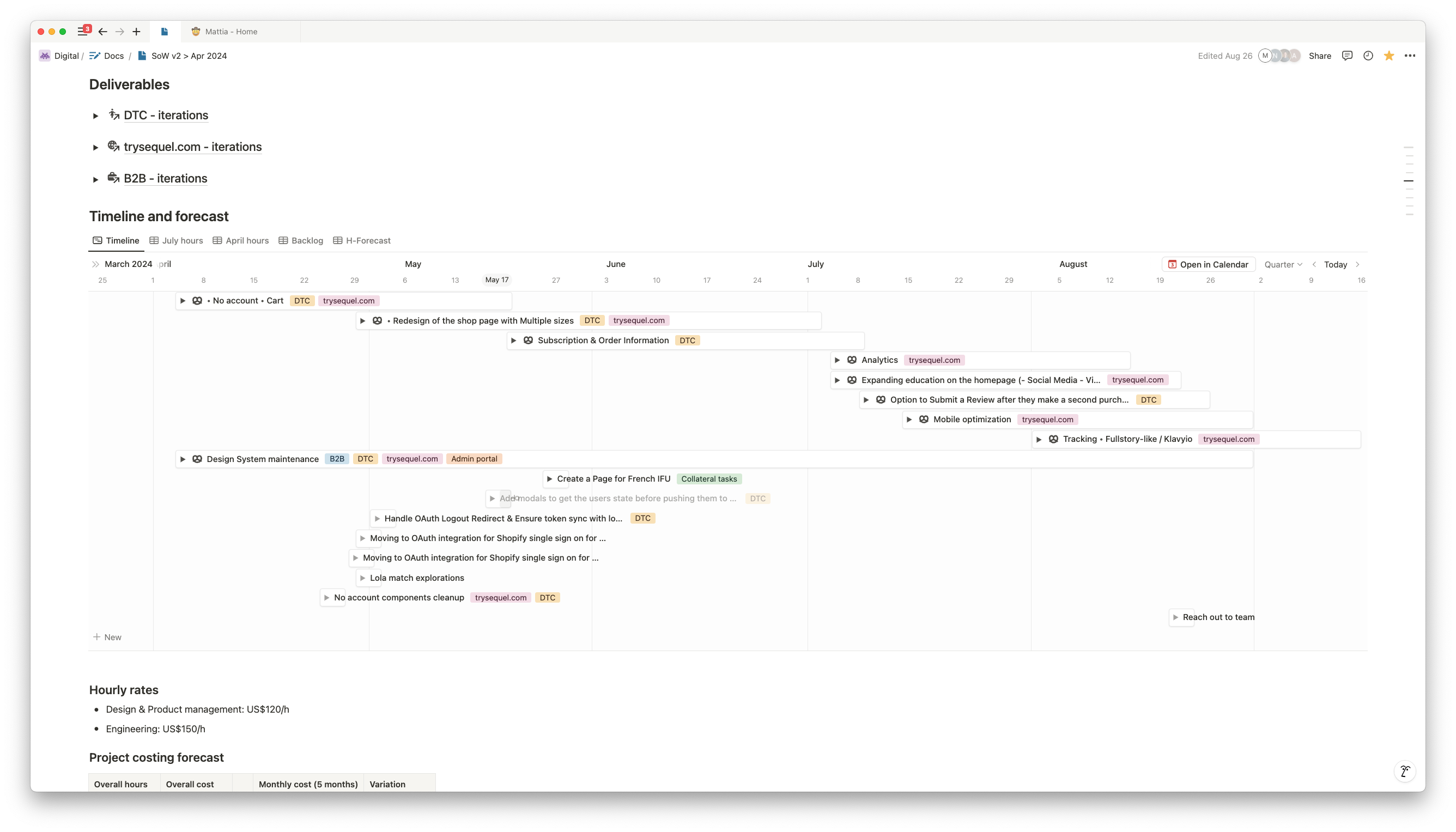
I organised the work through a Scope of Work document to create a clear and intuitive overview of a multi-phase digital project, ensuring all stakeholders had complete visibility of timelines and priorities.
I opted to breaking down deliverables into distinct categories — one per product: DTC portal, B2B portal, and TrySequel.com (the marketing website) — to make it easy to track progress across different product verticals, and have a systemic view of the work.
This structure allowed to highlight interdependencies and ensure that overlapping tasks could be easily identified at a glance, helping to reduce ambiguity and facilitating efficient communication with cross-functional teams.
For the roadmap, I prioritised clarity, allowing stakeholders to see both high-level project phases and detailed tasks.
This organisation helped me stay on top of deadlines and quickly address any scheduling conflicts.
Teams responded very positively to the structured setup, appreciating the transparency and clarity it brought to complex project workflows.
Having this organised space meant that team members could independently track progress, understand dependencies, and identify where their contributions fit into the bigger picture.
Overall, the structure fostered a sense of ownership and accountability, as tasks were clearly assigned and deadlines were visible, making it easier for everyone to stay on track and meet key milestones.
Design system setup
In the 2.5 years at the company, we have gone through three major re-branding exercises. All of them based on new findings of the messaging that resonated with test user groups.
After the second re-branding, suspecting more would come – I’ve paired with the engineering team to ensure all platforms were structured in a lego-like way, and we could easily swap UI elements with a new coat of paint.
The core Figma structure – using advanced Variables mirrored in code – resulted in the following three Design System files. The lego bricks for all the 3 products.

Final results
Below is the file used to build all things – cleaned up from the majority of the noise :D
03